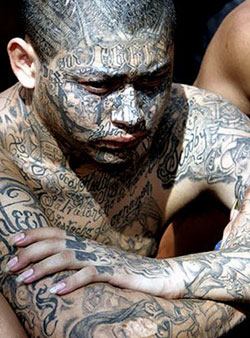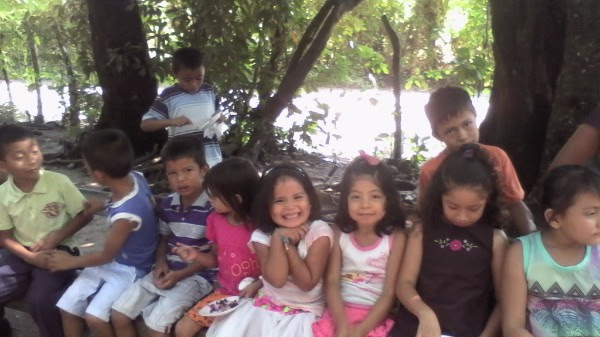
Youth for Christ ministry in El Salvador is still in the target stage. This means key contacts have been identified, and a ministry plan is being developed but ministry has not yet commenced.
About El Salvador
El Salvador
Introduction
El Salvador achieved independence from Spain in 1821 and from the Central American Federation in 1839. A 12-year civil war, which cost about 75,000 lives, was brought to a close in 1992 when the government and leftist rebels signed a treaty that provided for military and political reforms.
Geography
Location
Location: Central America, bordering the North Pacific Ocean, between Guatemala and Honduras
Geographic Coordinates: 13 50 N, 88 55 W
Area
Total Area: 21,041 sq km Rank: 153
Land Area: 20,721 sq km
Water Area: 320 sq km
Comparison: slightly smaller than Massachusetts
Land Boundaries: 545 km
Bordering Countries: Guatemala 203 km, Honduras 342 km
Coastline: 307 km
Climate
tropical; rainy season (May to October); dry season (November to April); tropical on coast; temperate in uplands
Terrain
mostly mountains with narrow coastal belt and central plateau
Elevations
Lowest Point: Pacific Ocean 0 m
Highest Point: Cerro El Pital 2,730 m
Natural Resources
hydropower, geothermal power, petroleum, arable land
Land Use
Arable land: 31.37%
Permanent Crops: 11.88%
Other: 56.75% (2005)
Irrigated Land: 450 sq km (2003)
Renewable Water Resources: 25.2 cu km (2001)
Total Freshwater withdrawal (domestic/industrial/agricultural): 1.28 cu km/yr (25%/16%/59%)
Freshwater Withdrawal Per Capita: 186 cu m/yr (2000)
Environment
Natural Hazards: known as the Land of Volcanoes; frequent and sometimes destructive earthquakes and volcanic activity; extremely susceptible to hurricanes
Environmental Issues: deforestation; soil erosion; water pollution; contamination of soils from disposal of toxic wastes
Environmental Agreements: Party to: Biodiversity, Climate Change, Climate Change-Kyoto Protocol, Desertification, Endangered Species, Hazardous Wastes, Ozone Layer Protection, Wetlands
Geography Notes
smallest Central American country and only one without a coastline on Caribbean Sea
People
Population: 7,185,218 (July 2010 est.) Rank: 99
Age Structure
0-14 years: 35.4% (male 1,299,608/female 1,245,617)
15-64 years: 59.3% (male 2,033,423/female 2,225,810)
65 years and over: 5.3% (male 166,224/female 214,536) (2010 est.)
Median Age: 22.5 years
Population Growth
Growth Rate: 1.656% (2010 est.) Rank: 80
Birth Rate: 25.31 births/1,000 population (2010 est.) Rank: 70
Death Rate: 5.47 deaths/1,000 population (July 2010 est.) Rank: 176
Net Migration Rate: -3.27 migrant(s)/1,000 population (2010 est.) Rank: 147
Urbanization
Urban Population: 61% of total population (2008)
Rate of Urbanization: 1.9% annual rate of change (2005-10 est.)
Life and Death
Infant Mortality Rate: 21.52 deaths/1,000 live births Rank: 100
Life Expectancy at Birth: 72.33 years Rank: 120
Fertility Rate: 2.12 children born/woman (2010 est.) Rank: 73
Health and Disease
HIV/AIDS - Adult Prevalence Rate: 0.8% (2007 est.) Rank: 61
People living with HIV/AIDS: 35,000 (2007 est.) Rank: 67
HIV/AIDS Deaths: 1,700 (2007 est.) Rank: 64
Degree of Risk for Major Infectious Diseases: high
Food or waterborne diseases: bacterial diarrhea, hepatitis A, and typhoid fever
Vectorborne Diseases: dengue fever
Water Contact Diseases: leptospirosis (2009)
Nationality and Culture
Noun: Salvadoran(s)
Adjective: Salvadoran
Ethnic Groups: mestizo 90%, white 9%, Amerindian 1%
Religion: Roman Catholic 57.1%, Protestant 21.2%, Jehovah's Witnesses 1.9%, Mormon 0.7%, other religions 2.3%, none 16.8% (2003 est.)
Languages: Spanish, Nahua (among some Amerindians)
Education
Literacy: 81.1%
School life expectancy (primary to tertiary education): 12 years Male: 12 years Female: 12 years (2006)
Education expenditures: 3.1% of GDP (2006) Rank: 142
Government
Country Name
Conventional Long Form: Republic of El Salvador
Conventional Short Form: El Salvador
Local Long Form: Republica de El Salvador
Local Short Form: El Salvador
Government Type: republic
Capital: San Salvador Geographic Coordinates: 13 42 N, 89 12 W
Administrative divisions
14 departments (departamentos, singular - departamento); Ahuachapan, Cabanas, Chalatenango, Cuscatlan, La Libertad, La Paz, La Union, Morazan, San Miguel, San Salvador, San Vicente, Santa Ana, Sonsonate, Usulutan
Independence: 15 September 1821 (from Spain)
National holiday: Independence Day, 15 September (1821)
Constitution: 20 December 1983
Legal system: based on civil and Roman law with traces of common law; judicial review of legislative acts in the Supreme Court; has not accepted compulsory ICJ jurisdiction
Suffrage: 18 years of age; universal
Executive Branch
Chief of State: President Mauricio FUNES Cartagena (since 1 June 2009); Vice President Salvador SANCHEZ CEREN (since 1 June 2009); note - the president is both the chief of state and head of government
Head of Government: President Mauricio FUNES Cartagena (since 1 June 2009); Vice President Salvador SANCHEZ CEREN (since 1 June 2009)
Cabinet: Council of Ministers selected by the president
Elections: president and vice president elected on the same ticket by popular vote for a single five-year term; election last held on 15 March 2009 (next to be held in March 2014)
Election Results: Mauricio FUNES Cartagena elected president; percent of vote - Mauricio FUNES Cartagena 51.3%, Rodrigo AVILA 48.7%
Legislative Branch
unicameral Legislative Assembly or Asamblea Legislativa (84 seats; members elected by direct, popular vote to serve three-year terms)
Elections: last held on 18 January 2009 (next to be held in March 2012)
Election Results: percent of vote by party - NA; seats by party - FMLN 35, ARENA 32, PCN 11, PDC 5, CD 1
Judicial branch
Supreme Court or Corte Suprema (15 judges are selected by the Legislative Assembly; the 15 judges are assigned to four Supreme Court chambers - constitutional, civil, penal, and administrative conflict)
Politics
Political Parties and Leaders: Christian Democratic Party or PDC [Rodolfo PARKER]; Democratic Convergence or CD [Hector DADA HIREZI] (formerly United Democratic Center or CDU); Farabundo Marti National Liberation Front or FMLN [Medardo GONZALEZ]; National Conciliation Party or PCN [Ciro CRUZ ZEPEDA]; Nationalist Republican Alliance or ARENA [Rodrigo AVILA]; Popular Social Christian Party or PPSC [Rene AGUILUZ]; Revolutionary Democratic Front or FDR [Julio Cesar HERNANDEZ Carcamo]
Political Pressure Groups and Leaders: labor organizations - Electrical Industry Union of El Salvador or SIES; Federation of the Construction Industry, Similar Transport and other activities, or FESINCONTRANS; National Confederation of Salvadoran Workers or CNTS; National Union of Salvadoran Workers or UNTS; Port Industry Union of El Salvador or SIPES; Salvadoran Union of Ex-Petrolleros and Peasant Workers or USEPOC; Salvadoran Workers Central or CTS; Workers Union of Electrical Corporation or STCEL; business organizations - National Association of Small Enterprise or ANEP; Salvadoran Assembly Industry Association or ASIC; Salvadoran Industrial Association or ASI
International Organization Participation: BCIE, CACM, CD, FAO, G-77, IADB, IAEA, IBRD, ICAO, ICC, ICRM, IDA, IFAD, IFC, IFRCS, ILO, IMF, IMO, Interpol, IOC, IOM, IPU, ISO (correspondent), ITSO, ITU, ITUC, LAES, MIGA, MINURSO, NAM (observer), OAS, OPANAL, OPCW, PCA, RG, SICA, UN, UNCTAD, UNESCO, UNIDO, UNIFIL, Union Latina, UNMIL, UNMIS, UNOCI, UNWTO, UPU, WCO, WFTU, WHO, WIPO, WMO, WTO
Flag Description: three equal horizontal bands of blue (top), white, and blue with the national coat of arms centered in the white band; the coat of arms features a round emblem encircled by the words REPUBLICA DE EL SALVADOR EN LA AMERICA CENTRAL; the banner is based on the former blue-white-blue flag of the Federal Republic of Central America; the blue bands symbolize the Pacific Ocean and the Caribbean Sea, while the white band represents the land between the two bodies of water, as well as peace and prosperity
Note: similar to the flag of Nicaragua, which has a different coat of arms centered in the white band - it features a triangle encircled by the words REPUBLICA DE NICARAGUA on top and AMERICA CENTRAL on the bottom; also similar to the flag of Honduras, which has five blue stars arranged in an X pattern centered in the white band
Economy
Economy Overview: Despite being the smallest country geographically in Central America, El Salvador has the third largest economy with a per capita income that is roughly two-thirds that of Costa Rica and Panama, but more than double that of Nicaragua. Growth has been modest in recent years and the economy contracted nearly 3% in 2009. El Salvador leads the region in remittances per capita with inflows equivalent to nearly all export income and about a third of all households receive these financial inflows. In 2006 El Salvador was the first country to ratify the Central America-Dominican Republic Free Trade Agreement. CAFTA has bolstered exports of processed foods, sugar, and ethanol, and supported investment in the apparel sector, which faced Asian competition with the expiration of the Multi-Fiber Agreement in 2005. In anticipation of the declines in the apparel sector's competitiveness, the previous administration sought to diversify the economy by promoting the country as a regional distribution and logistics hub, and by promoting tourism investment through tax incentives. El Salvador has promoted an open trade and investment environment, and has embarked on a wave of privatizations extending to telecom, electricity distribution, banking, and pension funds. In late 2006, the government and the Millennium Challenge Corporation signed a five-year, $461 million compact to stimulate economic growth and reduce poverty in the country's northern region, the primary conflict zone during the civil war, through investments in education, public services, enterprise development, and transportation infrastructure. With the adoption of the US dollar as its currency in 2001, El Salvador lost control over monetary policy. Any counter-cyclical policy response to the downturn must be through fiscal policy, which is constrained by legislative requirements for a two-thirds majority to approve any international financing.
Gross Domestic Product
GDP (purchasing power parity): $43.27 billion (2009 est.) Rank: 93
GDP - real growth rate: -3.1% (2009 est.) Rank: 166
GDP - per capita (PPP): $7,200 (2009 est.) Rank: 124
GDP - Composition by Sector: Agriculture: 10.6% Industry: 28.9% Services: 60.5% (2009 est.)
Labor Force
Labor Force: 2.917 million (2009 est.) Rank: 105
Labor force - by occupation: Agriculture: 19% Industry: 23% Services: 58% (2006 est.)
Unemployment Rate: 7.2% (2009 est.) Rank: 6.9% (2008 est.)
Note: data are official rates; but the economy has much underemployment
Poverty
Population below poverty line: 30.7% (2006 est.)
$449 million (31 December 2008 est.)
Rio Lempa partially navigable for small craft (2008)
Transnational Issues
International Disputes: International Court of Justice (ICJ) ruled on the delimitation of "bolsones" (disputed areas) along the El Salvador-Honduras boundary, in 1992, with final agreement by the parties in 2006 after an Organization of American States (OAS) survey and a further ICJ ruling in 2003; the 1992 ICJ ruling advised a tripartite resolution to a maritime boundary in the Gulf of Fonseca advocating Honduran access to the Pacific; El Salvador continues to claim tiny Conejo Island, not identified in the ICJ decision, off Honduras in the Gulf of Fonseca
Want to know more? Show Full Profile
Explore YFC International
- EverYouth Drama Ministry » Evangelism Through Drama
- YFC Alumni Fellowship » Reconnect with old friends and the ministry of YFC.
- YFC Global Launch » Helping Young Leaders Achieve Their God-given Dreams!
- YFC University » Quality online courses on the Bible, Ministry, and the Christian Life.
- YFC Coaching » Assisting YFC Staff to grow and become more effective in bringing out the best in those around them.
- YFC World » STAFF ONLY